Atomic Habits Book Review for English Learners
If you want to improve your English in a way that actually lasts, Atomic Habits offers a useful idea: small, consistent actions matter more than big, occasional effort.
In the video below, I share my thoughts on Atomic Habits by James Clear and how its ideas connect to learning English, particularly at that intermediate to advanced stage where progress feels slower and less visible.
Speaking Activities:
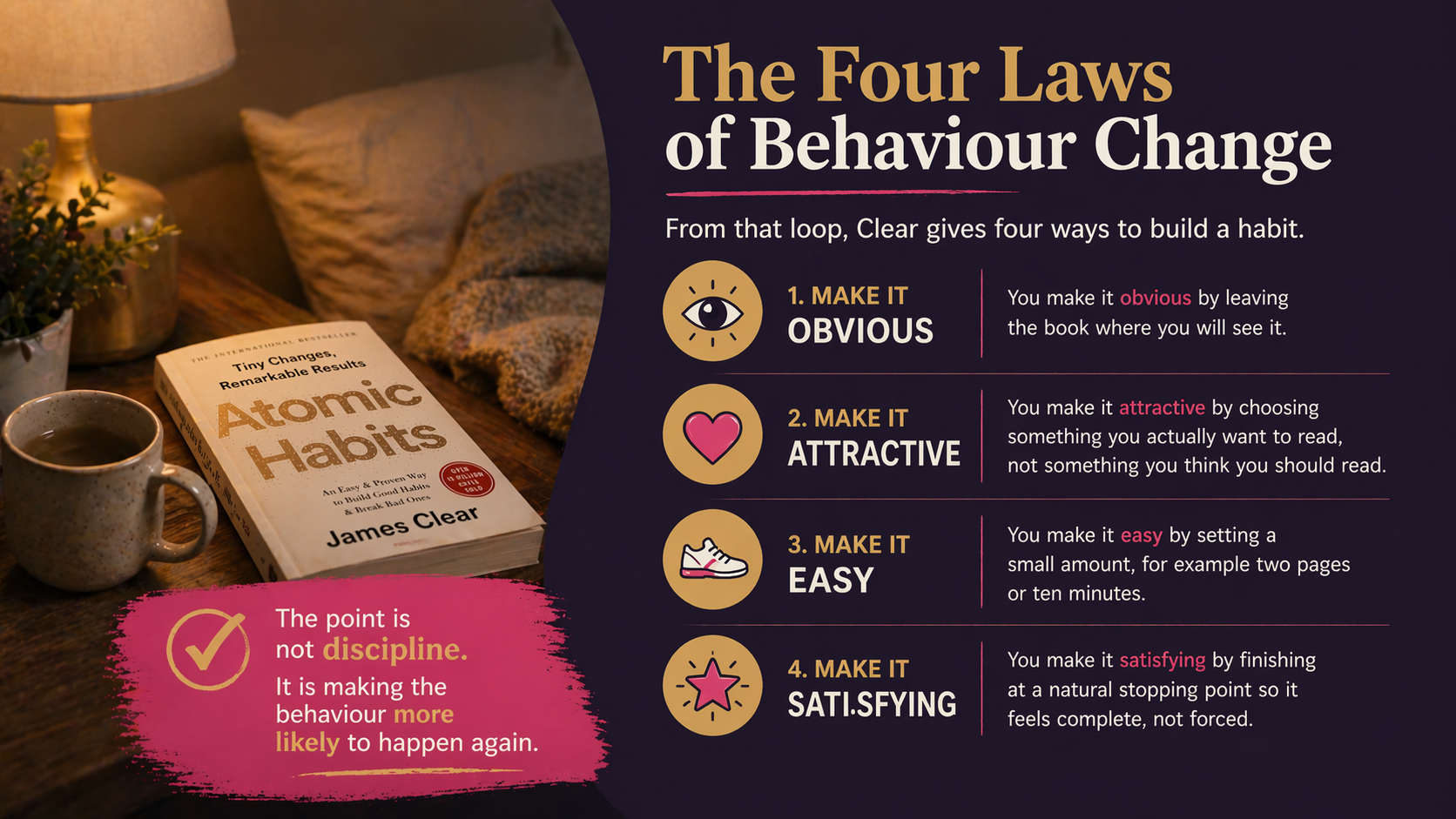
- Which of the Four Laws of Behaviour Change have you found easiest to apply, and which one breaks down for you in practice?
- The book argues that identity change is the foundation of habit change. Did that idea resonate with you, or did it feel abstract?
- Have you actually implemented habit stacking in a consistent way, or does it remain more of a concept than a practice for you?
- The idea of “never miss twice” is central to the book. How realistic has that been in your own experience?
- Which part of the book felt most convincing when you read it, but hardest to sustain over time?
- The book emphasises reducing friction. What are the main sources of friction in your current English learning habits?
- Do you think the systems-first approach works equally well for long-term, open-ended goals like language learning?
- The examples in the book are often quite controlled and structured. Do they reflect your reality, or do they feel slightly idealised?
- Have you noticed any habits in your own life that became entrenched without you actively choosing them?
- After reading the book, did you actually change anything in your daily behaviour, or mainly your understanding?
- If you had to keep just one idea from the book and ignore the rest, what would it be?
Vocabulary Review
Well-renowned (adjective)
Meaning: Widely known and respected.
Example (from the video): “It is a viral bestseller. It’s well renowned and it’s a book that I wanted to read for a long time.”
Synonyms: respected, established, recognised
Antonyms: unknown, obscure, unrecognised
Collocations: well-renowned author, well-renowned expert, well-renowned book
Premise (noun)
Meaning: The main idea or foundation of something.
Example (from the video): “The premise of the book is: tiny changes, remarkable results – an easy and proven way to build good habits and break bad ones.”
Synonyms: concept, foundation, idea
Antonyms: conclusion, result
Collocations: central premise, underlying premise, basic premise
All or nothing (phrase)
Meaning: Doing something completely or not at all.
Example (from the video): “I tend to be quite an all or nothing kind of person.”
Synonyms: extreme, uncompromising
Antonyms: balanced, moderate
Collocations: all-or-nothing mindset, all-or-nothing approach
Incremental (adjective)
Meaning: Developing through small, gradual steps.
Example (from the video): “And this book is about how change actually comes from the small things, the incremental things that add up slowly over time.”
Synonyms: gradual, step-by-step, progressive
Antonyms: sudden, immediate, dramatic
Collocations: incremental progress, incremental change, incremental improvement
Sticking point (noun)
Meaning: A difficulty that prevents progress.
Example (from the video): “So we’ll talk about the sticking point that I have with the book.”
Synonyms: obstacle, difficulty, barrier
Antonyms: advantage, support
Collocations: main sticking point, major sticking point
Sticky (adjective)
Meaning: Easy to remember or continue over time.
Example (from the video): “How do you actually set good habits? How do you make them sticky?”
Synonyms: memorable, lasting
Antonyms: forgettable, temporary
Collocations: sticky habit, sticky idea
Entrenched (adjective)
Meaning: Firmly established and difficult to change.
Example (from the video): “It had become a very entrenched habit without me being aware of it.”
Synonyms: fixed, rooted, established
Antonyms: flexible, changeable
Collocations: deeply entrenched habit, entrenched behaviour
To have something down (phrase)
Meaning: To have something organised or mastered.
Example (from the video): “I had to have that down. I had to really have a solid morning routine.”
Synonyms: master, control, manage
Antonyms: struggle with, lose control of
Collocations: have it down, have a routine down
To be on top of something (phrase)
Meaning: To be in control of a situation.
Example (from the video): “I had to be on top of that and into the school early.”
Synonyms: manage, handle, control
Antonyms: lose control, fall behind
Collocations: stay on top of things, be on top of your schedule
Riveting (adjective)
Meaning: Extremely interesting and engaging.
Example (from the video): “I really did find that they were amazing, really riveting stories that backed up the points.”
Synonyms: engaging, compelling, fascinating
Antonyms: dull, boring
Collocations: riveting story, riveting read
Caveat (noun)
Meaning: A warning or limitation that should be considered.
Example (from the video): “I would highly recommend this book for anyone who wants to work on creating amazing habits in their lives but with a caveat.“
Synonyms: warning, condition, limitation
Antonyms: guarantee, certainty
Collocations: with a caveat, one caveat
To take something with a pinch of salt (phrase)
Meaning: To not completely accept something as true.
Example (from the video): “You do need to take some of the advice with a pinch of salt.”
Synonyms: be sceptical, question, doubt
Antonyms: accept, believe fully
Collocations: take advice with a pinch of salt
Posit (verb)
Meaning: To suggest or propose an idea.
Example (from the video): “The author posits or states that there is a habit loop.”
Synonyms: suggest, propose, put forward
Antonyms: deny, reject
Collocations: posit a theory, posit an idea
Leeway (noun)
Meaning: A degree of flexibility or freedom to adjust.
Example (from the video): “We need to give ourselves a bit of leeway.“
Synonyms: flexibility, margin, room
Antonyms: restriction, limitation
Collocations: give leeway, allow leeway
Dry (adjective)
Meaning: Not interesting or engaging.
Example (from the video): “Once I’d got through some of the more scientific, drier parts, I really did find that they were amazing.”
Synonyms: dull, flat, uninteresting
Antonyms: engaging, lively
Collocations: dry explanation, dry content
My Biggest Takeaway
It sounds simple, but it I found the examples of small habits useful to look at. I sincerely do think I previously would have dismissed the value of reading a page or two a day instead of trying to set a goal of reading a bigger amount like a chapter.
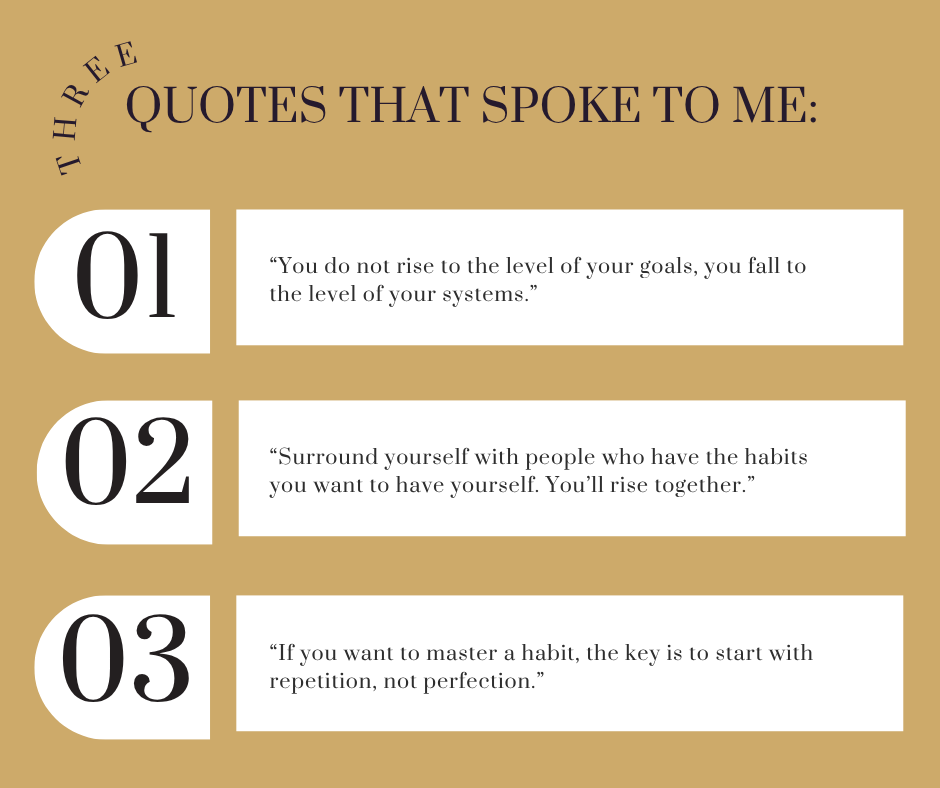
The example of the sports coach focusing not on the goal of winning the championship, but on the system of how the team practices, and builds habits daily also really stood out and got me thinking of how I could shift my own focus from goals to systems.
What do these quotes suggest to you or make you think about?
Also, if you have read Atomic Habits tell me what you thought of it! I would love to know.
The Read to Speak Book Club:
Develop your English speaking fluency and confidence

Atomic Habits was the April 2026 Book Club pick.
Each month we read a new text and then come together to share our opinions about the big ideas within it.
If you love reading, thinking deeply, and expressing yourself in English and you want to feel more fluent, more confident, and more you when you speak then The Read to Speak Book Club is here to support you.
